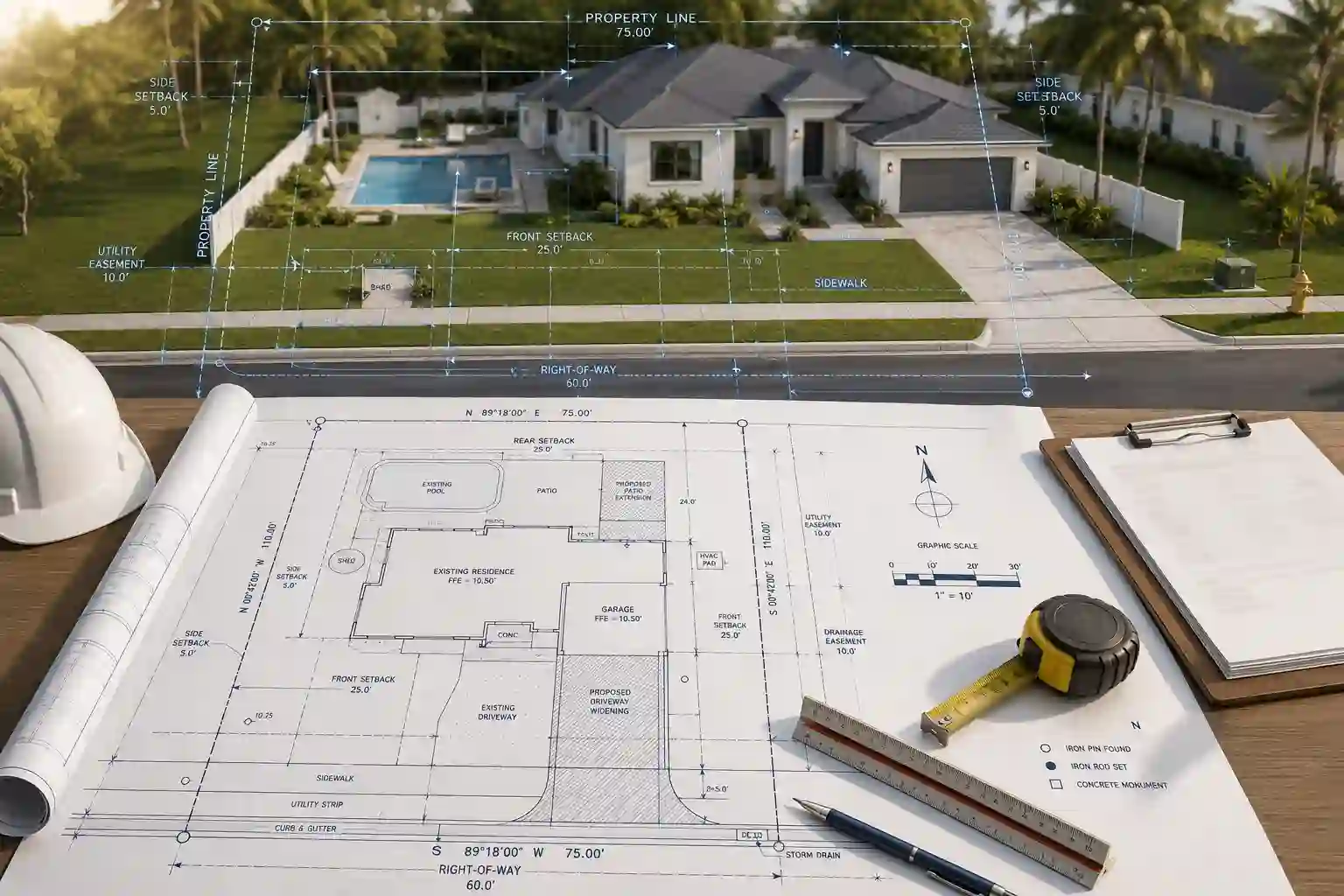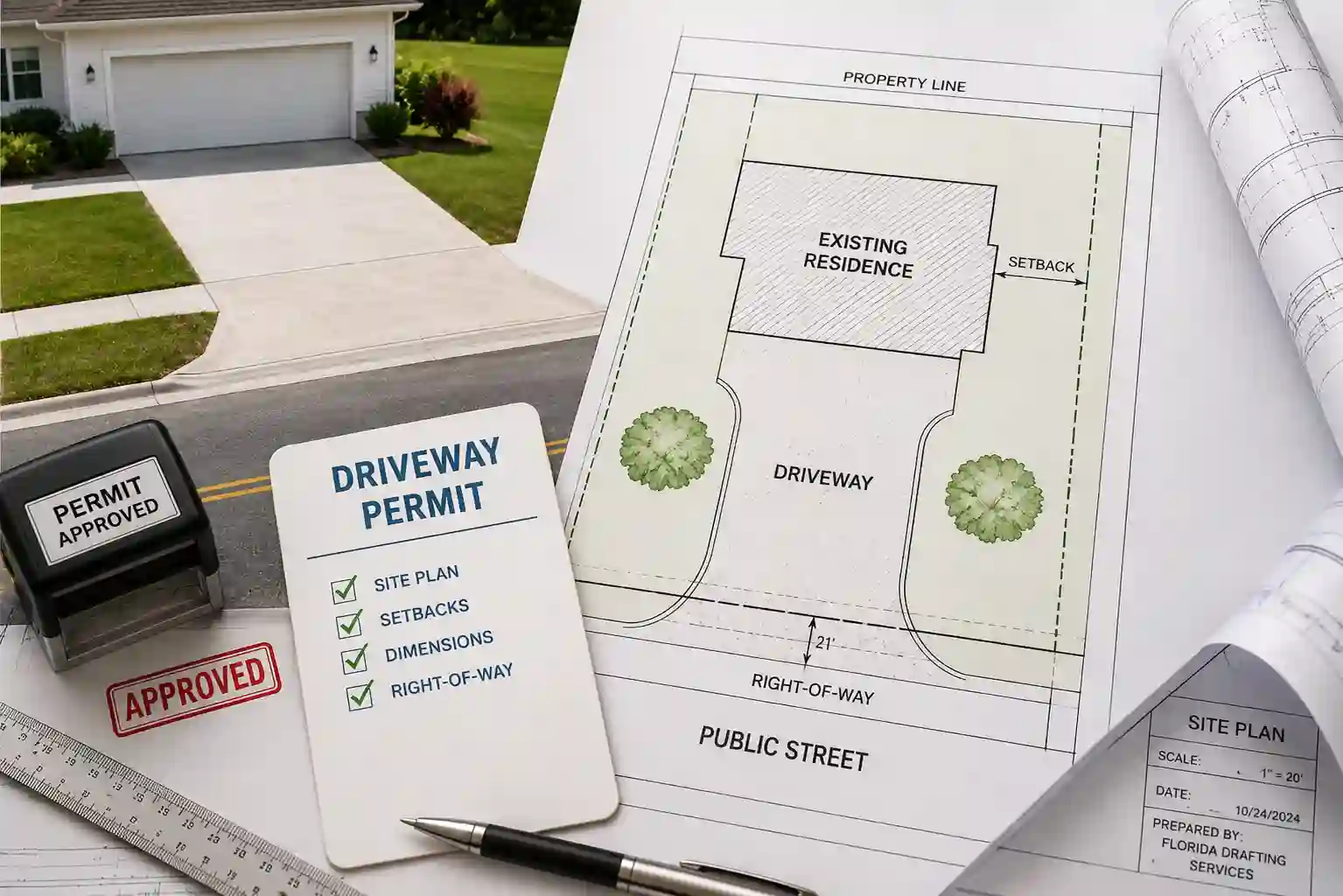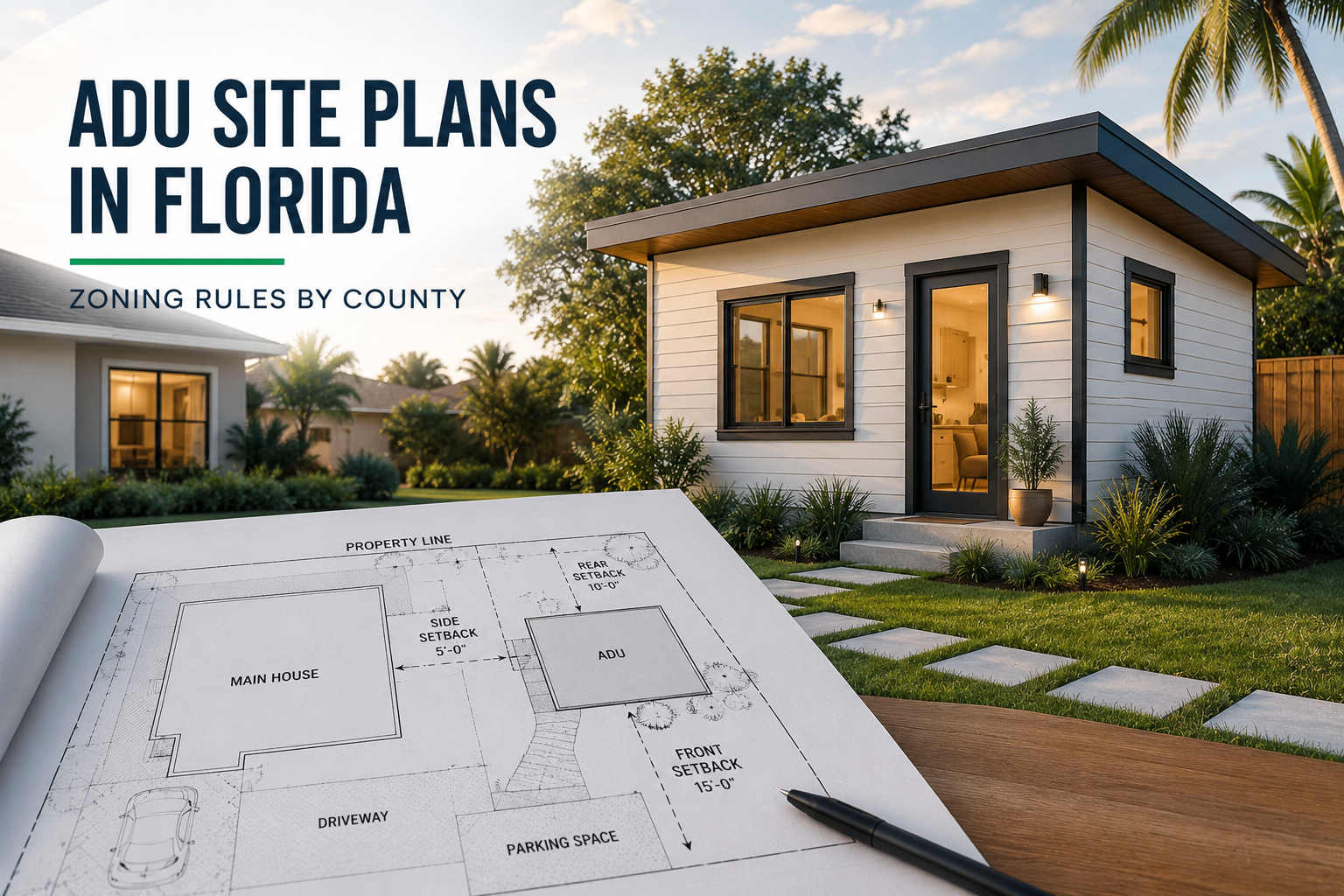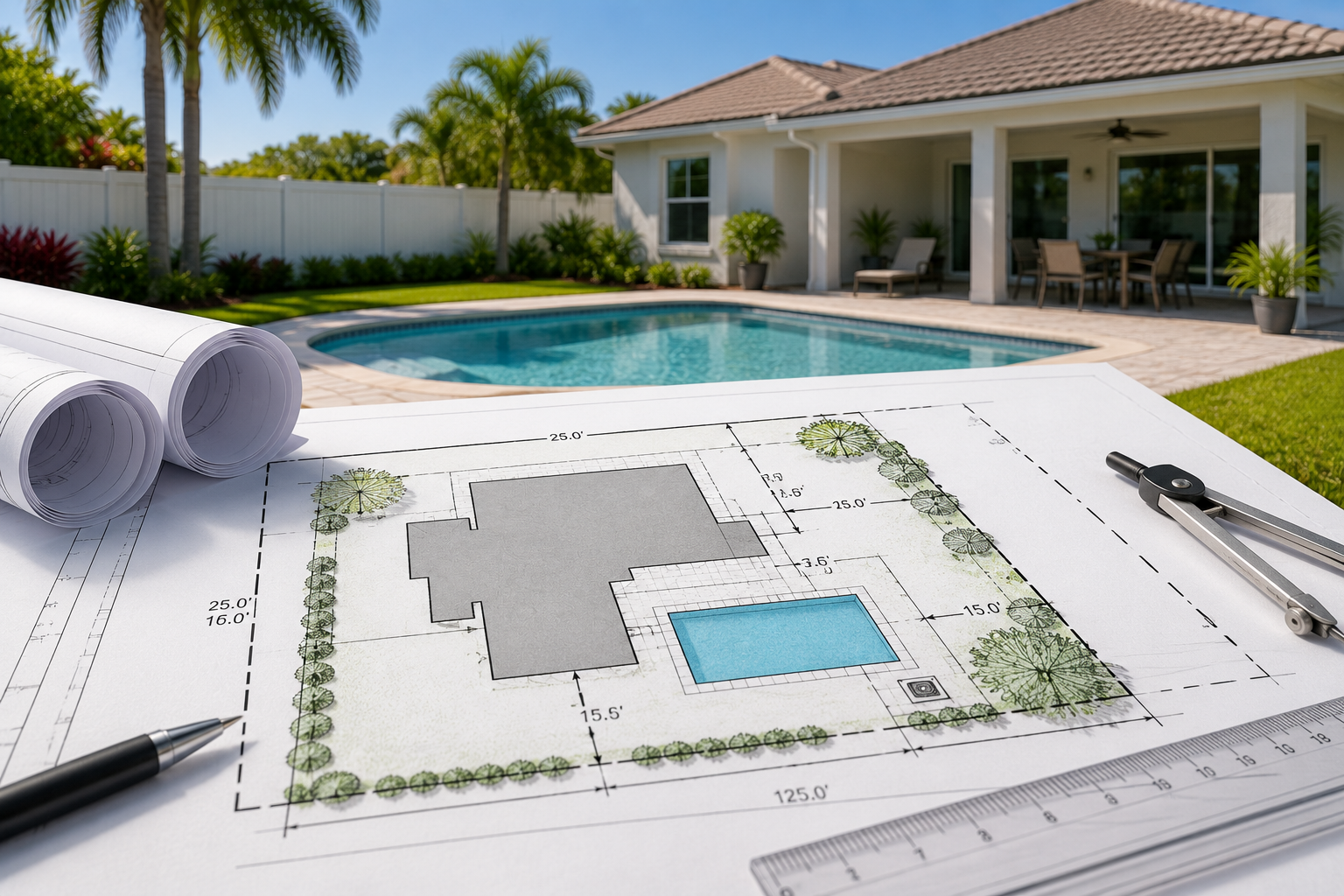
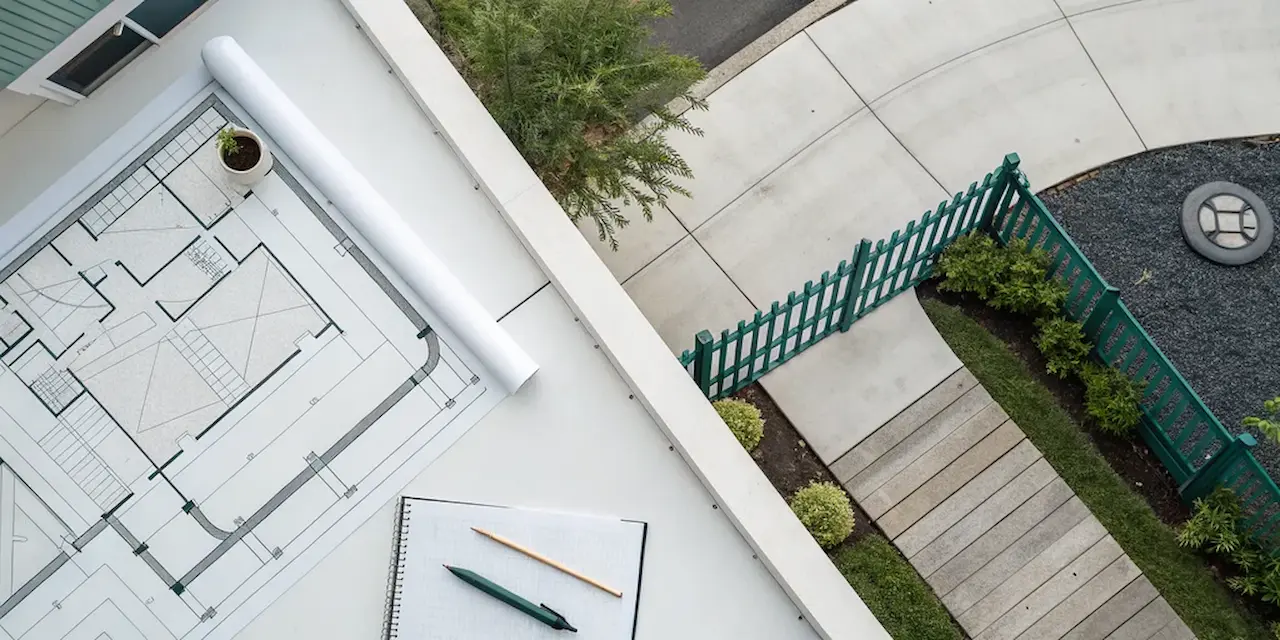
Florida fence permit site plan requirements are important for homeowners planning to install a fence in Florida. This guide explains fence permits, property line setbacks, and local regulations to help ensure compliance.
Here’s the breakdown.
Do All Florida Fences Require a Permit?
No. Florida doesn’t have a single statewide fence permit rule; this is set by each county and municipality.
Generally, fences require a permit in Florida if:
- The fence is over 4 feet in height (in most residential zones)
- You’re installing a fence in the front yard
- You’re installing a fence along a corner lot
Many Florida jurisdictions allow permit-free fences if:
- The fence is under 4 feet
- It’s in the rear or side yard (not visible from the street in some interpretations)
- It’s a temporary fence
Always check with your specific county or city building department before assuming no permit is needed.
A properly prepared Florida fence permit site plan helps confirm whether your project meets local permit requirements before construction begins.
Getting this wrong and building a fence without a required permit can result in having to tear it down.
Florida Counties That Require a Site Plan for Fence Permits
Based on my experience:
Miami-Dade: Yes, a site plan is required for fence permits. Must show fence line in relation to property lines, gate locations, and fence setback from property lines.
Broward: Depends on the municipality. Fort Lauderdale requires a site plan. Some smaller Broward cities may not. In most cases, a Florida fence permit site plan is required to show fence location, setbacks, and property boundaries.
Orange County: Yes, a site plan is required for fence permits.
Hillsborough County: Site plan required for fence permits.
Palm Beach County: Site plan required.
Most other Florida counties: Site plan required for fence permits.
What a Florida Fence Permit Site Plan Must Show
When a site plan is required for a fence permit in Florida, it needs to include:
- Property boundaries with dimensions
- Existing house and other structures
- Location of the proposed fence line (on, inside, or at the property line; this matters)
- Gate location(s)
- Fence height
- Any setbacks from the fence to property lines (some counties require fences to be set back 1–2 feet from the property line)
- Easements: fences cannot be built in easement areas
- Pool barrier notation if the fence serves as the pool barrier
Easement conflicts are one of the most common issues identified during a Florida fence permit site plan review.
Florida Fence Setback Rules
In most Florida counties, fences can be placed on the property line right at the edge of your lot. Some HOA rules and some municipal codes require the fence to be set back 1–2 feet inside the property line. Know which applies to you before you install.
Corner lots: Fences on corner lots must not obstruct visibility for traffic (sight line triangles). Most Florida counties have a sight triangle rule that prohibits fences, walls, or shrubs over a certain height within 25 feet of a street corner. Your site plan needs to show that the fence avoids the sight triangle.
This is a critical part of a Florida fence permit site plan submission for pool barrier approval.
Height limits by zone:
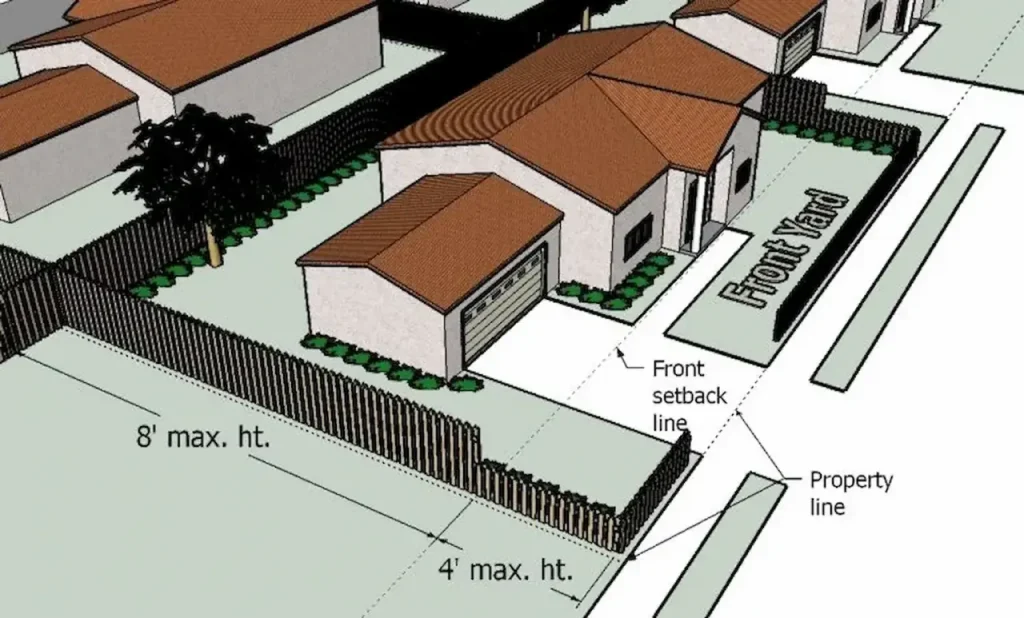
- Most Florida residential zones: 6 feet maximum in rear and side yards, 4 feet maximum in front yards
- Some areas allow 8-foot fences in commercial zones
- Always verify for your specific zone
These height rules must be clearly reflected in a Florida fence permit site plan to avoid permit rejection.
Pool Barrier Fences
If your fence serves as the barrier for a swimming pool (required by Florida Statute 515), it must meet specific requirements:
- Minimum 4 feet high
- No horizontal rails that can be used as a footing for climbing
- Maximum 4-inch gap between vertical pickets
- Self-closing, self-latching gate
- Gate latch on the poolside (so a child can’t reach over and open it)
Pool barrier compliance is often verified through a Florida fence permit site plan during permit review.
The site plan for a fence that serves as a pool barrier must clearly show that it meets these requirements.
Common Fence Permit Rejection Reasons in Florida
Fence shown in easement area: drainage and utility easements prohibit fencing in many counties
Missing gate locations: required on the plan for all fence permits
Corner lot sight triangle not addressed: automatic rejection in many jurisdictions
Wrong fence setback: especially if your HOA or municipality requires a setback from the property line
If you’ve been rejected, use our Permit Rejection Fix Tool.
Get Your Florida Fence Permit Site Plan
A fence permit site plan from Site Plans FL: $79.
We know every Florida county’s fence permit requirements. We’ll draw it right the first time.