Getting a building permit in Miami-Dade County often requires more than a simple sketch of your property. Depending on the project, your permit package may need a scaled site plan, property survey, floor plans, elevations, engineering information, permit forms and other supporting documents.
This guide explains the main Miami-Dade site plan requirements, how the permit application and plan review process works, what your site plan may need to show, and what to check before submitting drawings in 2026.
What Is a Site Plan for a Miami-Dade Permit?
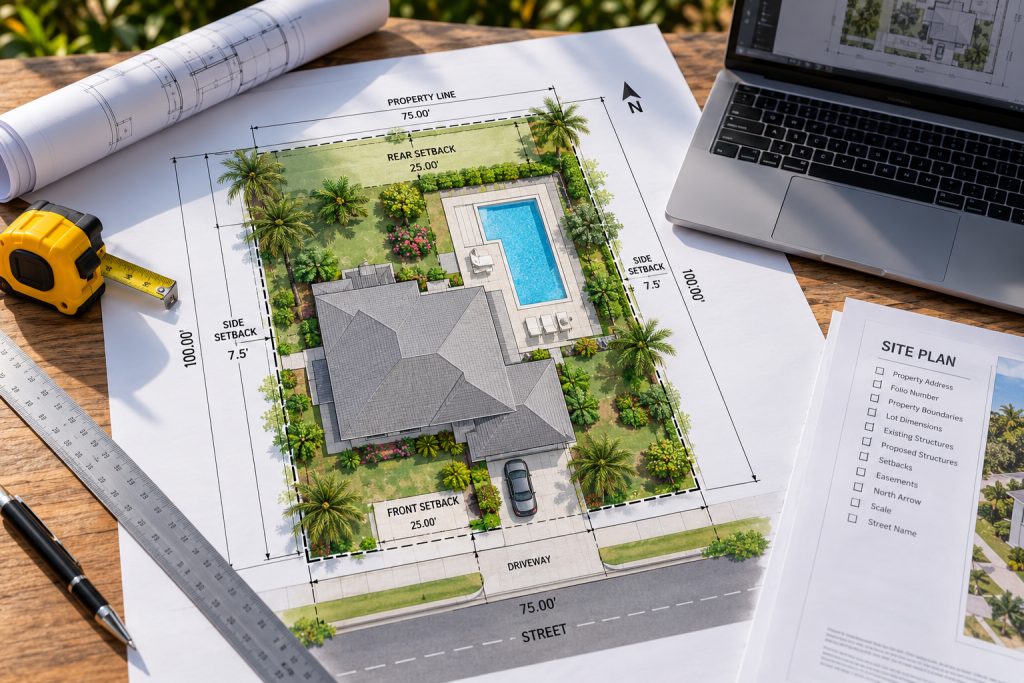
A site plan is a scaled overhead drawing showing the property and the location of existing and proposed improvements.
It helps zoning and building reviewers understand how the proposed project relates to:
- Property boundaries
- Existing buildings
- Proposed construction
- Required setbacks
- Easements
- Streets and rights-of-way
- Lot coverage
- Drainage
- Flood conditions
- Other site-specific restrictions
A site plan is not necessarily the same thing as a complete permit drawing package.
For example, an addition, garage, ADU or new building may require architectural, structural, electrical, plumbing or mechanical drawings in addition to the site plan.
If you need more than a basic property drawing, review our Florida permit drawing and drafting services.
Miami-Dade Building Permit Requirements
For permit applications requiring plans, Miami-Dade County may require several documents before the application can proceed through plan review.
Common submission items include:
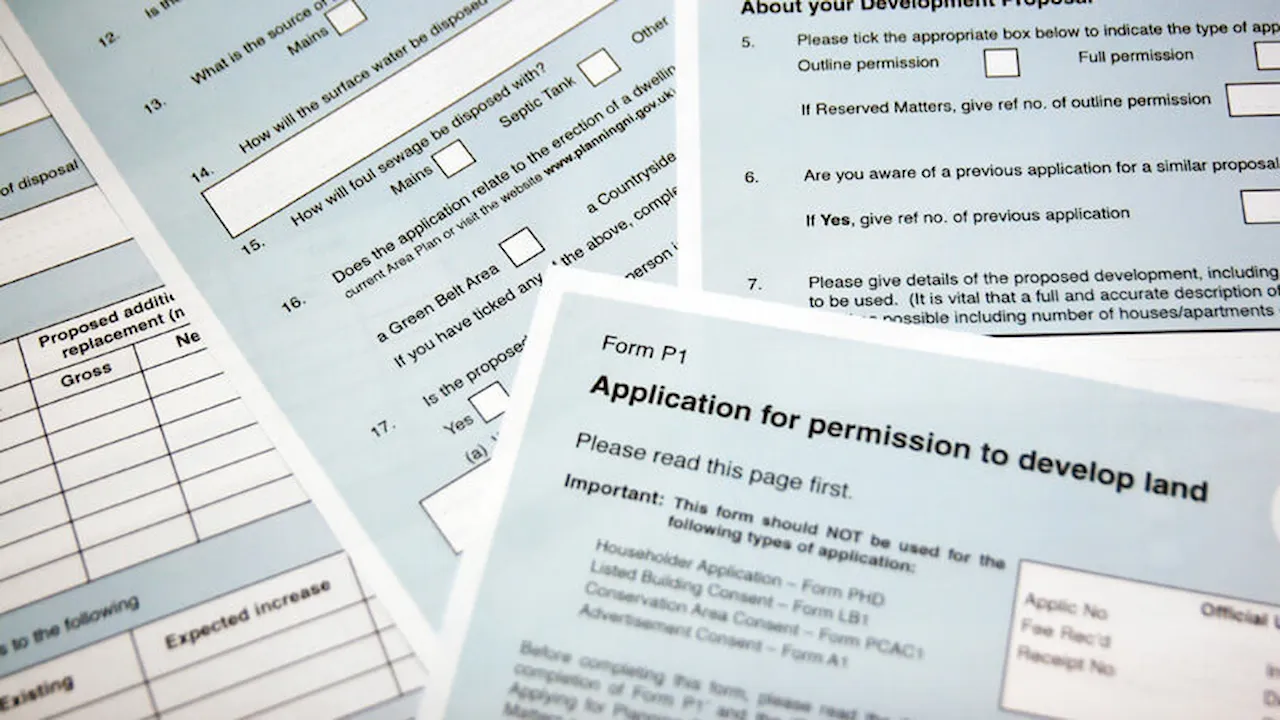
- Completed Building Permit Application
- Completed Miami-Dade Contact Sheet
- Property or boundary survey when applicable
- Drawn-to-scale plans
- Site plan
- Floor plan when applicable
- Finish floor elevation information when applicable
- Structural information
- Electrical plans
- Plumbing plans
- Mechanical plans
- Roofing information
- Supporting calculations or product documentation when required
The exact documents depend on the work being permitted.
A fence permit, pool permit and home addition will not require exactly the same drawing package.
Site Plan vs Full Permit Set
This distinction is important.
A site plan primarily shows where improvements are located on the property.
A full permit set may include:
- Site plan
- Existing floor plan
- Proposed floor plan
- Demolition plan
- Roof plan
- Building elevations
- Sections
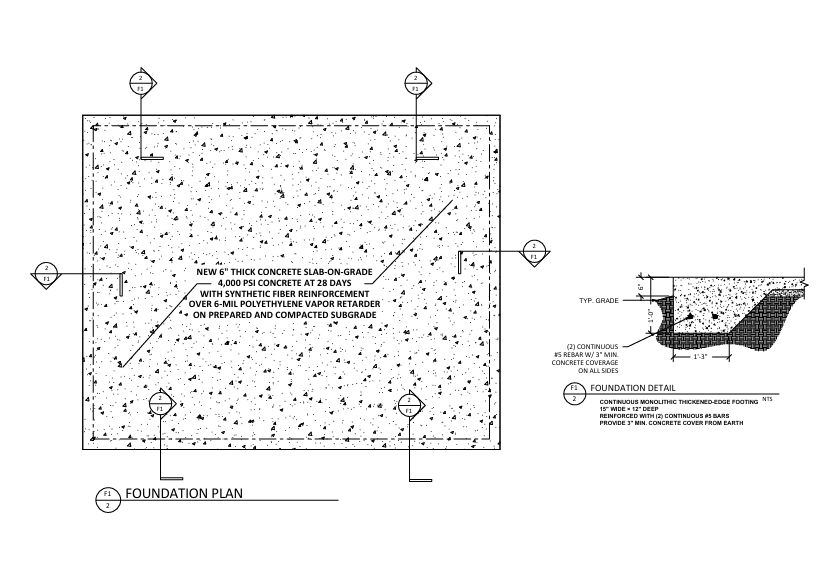
- Foundation details
- Structural framing
- Electrical drawings
- Plumbing drawings
- HVAC drawings
- Energy calculations
- Engineering details
Before ordering drawings, confirm whether the building department requested only a site plan or a complete permit drawing package.
What Should a Miami-Dade Site Plan Show?
The exact requirements vary according to the property, zoning district and project type, but a permit site plan commonly needs to identify the property clearly and show the proposed work in relation to the lot.
Property Information
Include applicable property information such as:
- Project address
- Folio or parcel number
- Property boundaries
- Lot dimensions
- Street name
- North arrow
- Drawing scale
Where available or required, legal description and survey information may also be referenced.
Existing Improvements
Show existing improvements that affect the proposed project, including applicable:
- Main residence
- Detached buildings
- Garages
- Pools
- Sheds
- Driveways
- Patios
- Walkways
- Fences
- Walls
- Existing additions
Dimensions should be clear enough for the reviewer to understand the relationship between existing and proposed construction.
Proposed Work
The proposed project should be clearly distinguished from existing improvements.
Depending on the permit, this may include:
- Addition
- ADU
- Garage
- Carport
- Shed
- Pergola
- Pool
- Patio
- Deck
- Driveway
- Fence
- New residence
- Commercial improvement
Show relevant dimensions and distances from the proposed improvement to property lines and nearby structures.
Setbacks
Setbacks are one of the most important parts of a Miami-Dade site plan.
Show applicable:
- Front setback
- Rear setback
- Interior side setback
- Street-side setback
- Distance between structures
Do not assume that every Miami-Dade property uses the same setback requirements.
Required setbacks vary according to zoning district, lot configuration, proposed use, structure type and other property-specific conditions.
You can learn more about preparing drawings for residential projects on our residential site plan service.
Miami-Dade Setback Requirements Are Property-Specific
One major mistake is using a generic Miami-Dade setback table without confirming the property’s zoning district.
Miami-Dade contains multiple residential zoning classifications, and the required front, rear, interior-side and street-side setbacks can differ significantly between them.
Pool, shed, accessory structure and principal building setbacks can also be different.
Before finalizing a site plan, confirm:
- Zoning district
- Lot dimensions
- Corner or interior lot status
- Existing nonconforming conditions
- Easements
- Accessory structure rules
- Pool requirements
- Building coverage
- Applicable municipal requirements
If the property is located inside an incorporated municipality such as Miami, Miami Beach, Coral Gables, Homestead or another city, additional municipal zoning and permitting procedures may apply.
Do You Need a Survey for a Miami-Dade Site Plan?
Many exterior improvement projects require accurate property information, and a current survey may be requested as part of the permit process.
A survey is particularly important when the project depends on exact:
- Property boundaries
- Setbacks
- Easements
- Existing structures
- Encroachments
- Elevations
GIS parcel information and aerial imagery can be useful during preliminary planning, but they should not automatically be treated as a substitute for a licensed boundary survey when the permitting authority requires one.
If you already have a survey, send it with your project information before drafting begins.
If you do not have one, we can first review the property and project scope to determine what information is likely to be needed.
Miami-Dade Permit Application and Contact Sheet
Your drawings are only one part of the permit submission.
Miami-Dade County commonly requires a completed Building Permit Application and Contact Sheet with applications that enter plan review.
The Contact Sheet provides information that allows the department to communicate with the applicant and other project contacts during permitting.
Make sure the information on the permit application, Contact Sheet and plans is consistent.
Check items such as:
- Property address
- Owner information
- Applicant information
- Contractor information when applicable
- Folio number
- Project description
- Permit category
- Contact details
Differences between documents can create avoidable questions during processing.
Miami-Dade Permit Portal and Electronic Plan Submission
Miami-Dade County processes many permit applications and plan-review submissions electronically.
Plans and supporting documents should be prepared using the format required for the specific submission.
For applicable electronic submissions, Miami-Dade requires drawings and supporting documents to be provided in PDF format.
Plan sheets may need to be uploaded as individual PDF files, while calculations, applications, NOA documentation and supporting records may be grouped according to County file-submission rules.
The exact workflow can vary depending on whether you are submitting:
- A new permit
- A correction or rework
- A revision
- A municipal permit
- A permit extension
- A change of contractor
- Supporting documents
Always follow the current Miami-Dade submission instructions for your specific permit type.
Miami-Dade Plans Tracking: How to Check Your Permit Status
This section is especially useful if you have already submitted your application.
After a permit application that requires plan review is submitted, Miami-Dade may issue a process number that can be used to follow the application through review.
The County’s online system allows applicants to search using tracking, application, permit or invoice numbers.
Depending on the available record, you may also be able to search using an address or folio number.
What Can You Track?
The online system may show information related to:
- Application status
- Plan review
- Department reviews
- Permit records
- Reworks
- Processing progress
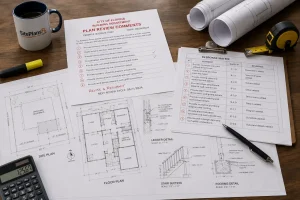
If you received a correction notice or plan-review comments, send us the complete comment sheet rather than trying to interpret individual comments separately.
We can review drawings we prepared and determine what needs to be revised within the applicable project scope.
See our guide to Florida permit rejection and site plan corrections.
Miami-Dade Plan Review Process
Submitting the plans does not automatically mean the permit is approved.
Projects requiring review may be routed to different disciplines depending on the scope.
These can include:
- Building
- Zoning
- Structural
- Electrical
- Plumbing
- Mechanical
- Roofing
- Fire
- Environmental
- Flood or other specialty reviews
A project only needs the reviews applicable to its scope.
During review, the department may approve the plans or return comments requesting additional information or corrections.
What Happens If the Plans Receive Comments?
Do not immediately redraw the entire permit package.
First:
- Read the complete correction notice.
- Identify which review discipline issued each comment.
- Determine whether the comment affects the site plan or another drawing.
- Update only the affected information.
- Check that revisions remain consistent across every sheet.
- Resubmit according to the County’s correction or rework procedure.
Small inconsistencies between revised drawings are a common reason projects receive additional review comments.
Miami-Dade Building Code Requirements in 2026
As of October 2026, Florida projects are still operating under the 8th Edition (2023) Florida Building Code.
The 9th Edition (2026) Florida Building Code is scheduled to take effect on December 31, 2026.
That timing matters for projects being designed or submitted near the end of the year.
The applicable code can depend on permit timing and other regulatory factors, so projects crossing the code-change date should be checked carefully.
Miami-Dade High-Velocity Hurricane Zone Requirements
Miami-Dade County is within Florida’s High-Velocity Hurricane Zone, commonly called the HVHZ.
HVHZ requirements primarily affect building design, structural components, roofing systems, openings, connections and product approvals rather than creating one universal additional site-plan requirement.
Depending on the project, the full permit package may require:
- Structural design information
- Wind design criteria
- Product approvals
- Miami-Dade Notices of Acceptance where applicable
- Connection details
- Roofing documentation
- Signed and sealed engineering
Do not add a generic NOA number to a site plan simply because the property is in Miami-Dade.
NOA and product approval requirements should correspond to the products and scope involved in the actual project.
Certified vs Non-Certified Site Plans in Miami-Dade
Not every property drawing requires a professional engineer’s seal.
For some limited zoning improvements, Miami-Dade allows applicable custom detail drawings that do not necessarily need to be certified by an architect or engineer, although they still need to comply with the relevant submission requirements.
More complex projects may require drawings prepared, reviewed, signed or sealed by a Florida-licensed design professional.
A Non-Certified Site Plan May Be Suitable For
Depending on the jurisdiction and project scope:
- Preliminary property planning
- Certain simple zoning improvements
- Basic permit-related layouts where professional certification is not required
- Projects for which the authority specifically accepts owner or drafter-prepared plans
Certified or PE-Reviewed Plans May Be Required For
Depending on the project:
- Structural work
- Significant additions
- New buildings
- Certain commercial work
- Engineered structures
- Structural connections
- Other work specifically requiring professional design
The permitting authority ultimately determines what level of professional certification is required.
We provide Florida PE review and permit drawing coordination when the project requires engineering involvement.
Miami-Dade Flood Zone Information
Flood information can significantly affect projects in Miami-Dade County.
Depending on the property and scope, permit drawings may need to address:
- Flood zone
- Base Flood Elevation
- Finished floor elevation
- Existing grade
- Proposed grade
- Floodplain requirements
- Elevation Certificate information
Not every site plan requires the same flood information.
The property’s flood designation and proposed construction determine what needs to be shown.
Flood information should therefore be verified for the specific property instead of assuming every Miami-Dade property is in the same flood zone.
Site Plans for Pools in Miami-Dade
Pool permit packages commonly require more site-specific information than a basic property plan.
Depending on the property and jurisdiction, the site plan may need to identify:
- Pool location
- Pool dimensions
- Distance to property lines
- Distance to structures
- Pool equipment location
- Deck or hardscape
- Pool barrier
- Gates
- Easements
- Lot coverage
- Flood-related information
Pool setbacks vary according to the zoning district and property conditions.
Do not use a single countywide pool setback without confirming the zoning classification.
Site Plans for Garages, Sheds, Pergolas and Accessory Structures
Accessory structures can trigger several zoning questions.
Before preparing the plan, check:
- Structure size
- Structure height
- Front setback
- Rear setback
- Side setback
- Street-side setback
- Separation from the main building
- Easements
- Lot coverage
- Flood restrictions
- Engineering requirements
A site plan for a small shed will usually be different from the permit package required for a detached garage.
Miami-Dade As-Built Plans and Existing Conditions
Another common search is for Miami-Dade as-built plans.
An as-built drawing documents conditions that already exist rather than showing only proposed construction.
As-built information may be needed when:
- Existing construction differs from prior drawings
- Permit records are incomplete
- An addition was constructed previously
- Existing conditions need to be documented
- A permit correction requests clarification
- A property owner needs drawings of the current layout
The required level of verification depends on what the drawing will be used for.
An as-built drawing should not automatically be presented as a certified survey or professional engineering document unless it was prepared and certified by the appropriate licensed professional.
Common Reasons Miami-Dade Permit Plans Receive Corrections
Many correction notices can be traced to missing, inconsistent or property-specific information.
Common issues include:
- Missing property dimensions
- Incorrect folio or address
- Missing setbacks
- Proposed work not clearly identified
- Survey information not matching the plan
- Missing easements
- Incorrect zoning assumptions
- Incomplete lot-coverage calculations
- Missing flood information when required
- Missing engineering information
- Incomplete permit forms
- Missing Contact Sheet
- Inconsistent dimensions between sheets
- Supporting documents uploaded incorrectly
Before submission, review the entire permit package rather than checking the site plan in isolation.
How to Get a Site Plan for Your Miami-Dade Property
If you need a site plan for a permit, the process can usually start with basic project information.
Step 1: Send the Property Address
The address allows us to begin checking available parcel, zoning and jurisdiction information.
Step 2: Tell Us What You Are Building
Explain whether the project involves a pool, shed, addition, garage, ADU, driveway, fence, patio, commercial project or another improvement.
Step 3: Send Your Existing Documents
Helpful documents may include:
- Current property survey
- Existing plans
- Permit comments
- Sketches
- Project dimensions
- Photos
- Manufacturer drawings
Step 4: We Review the Required Drawing Scope
We determine whether the project appears to need a standalone site plan or a broader permit drawing package.
Step 5: Drawings Are Prepared
Plans are prepared to scale using the available property and project information.
Step 6: Review Before Submission
You review project details before receiving the final drawing package.
For a project-specific checklist, use our Florida Permit Requirements Checker.
Miami-Dade Site Plan Cost
The cost depends on how much information and professional work the project requires.
A simple residential site plan costs less than a complete architectural and engineering package.
Pricing may be affected by:
- Project type
- Property complexity
- Survey availability
- Required drawings
- Flood conditions
- Engineering requirements
- Permit corrections
- Commercial vs residential scope
Site Plans FL currently offers basic site-plan drafting starting from $89, while more complex permit drawing and engineering services are quoted according to scope.
For accurate pricing, send the property address, project type and any survey or permit comments you already have.
Get a Miami-Dade Site Plan for Your Permit
Need drawings for a Miami-Dade County permit?
Site Plans FL prepares site plans and permit drawings for residential and commercial projects throughout Florida.
We can assist with:
- Residential site plans
- Commercial site plans
- Pool site plans
- Garage and addition plans
- ADU drawings
- Architectural permit drawings
- Structural drawings
- MEP drawings
- Permit corrections
- Florida PE review coordination
Send us your property address, project description and any survey or permit comments you already have.
We will review the information and help determine the appropriate drawing scope before you move forward.
Get a Free Project Scope Review
Frequently Asked Questions
What does Miami-Dade require on a site plan?
Requirements depend on the property and project. A site plan commonly shows property boundaries, lot dimensions, existing and proposed structures, setbacks, streets, north arrow, scale and applicable property information. Additional information may be required for pools, additions, commercial projects, flood-zone properties and other specific permit types.
How do I get a site plan of my property in Miami-Dade?
Start with your property address, existing survey and a description of the proposed project. A site plan can then be prepared using the applicable property information, zoning requirements and project dimensions.
Do I need a survey for a Miami-Dade permit?
Many exterior improvement projects require survey information, particularly when property boundaries, setbacks or easements affect the work. The exact requirement depends on the permit type and jurisdiction.
How do I track plans in Miami-Dade County?
Miami-Dade provides an online plan-status and application portal. Applications requiring plan review can generally be tracked using the assigned process, tracking, application or permit number. Some records can also be searched by address or folio.
What is a Miami-Dade Contact Sheet?
The Contact Sheet is a permit-related form used to provide applicant and project contact information. It is commonly required with plan-review submissions and reworks.
Do Miami-Dade site plans need to be signed and sealed?
Not every site plan requires professional certification. Whether a Florida architect or professional engineer must sign and seal the drawings depends on the project scope, permit type and applicable regulations.
What building code does Miami-Dade use in 2026?
As of October 2026, the 8th Edition (2023) Florida Building Code remains in effect. The 9th Edition (2026) is scheduled to become effective December 31, 2026.
Is Miami-Dade in the High-Velocity Hurricane Zone?
Yes. Miami-Dade is subject to Florida Building Code provisions applicable to the High-Velocity Hurricane Zone. These requirements can affect structural design, roofing, openings, connections and approved products within the overall permit package.
What happens if my Miami-Dade permit plans are rejected?
Review the correction comments first. Determine which drawing or document each comment affects, make the required revisions and resubmit through the applicable correction or rework procedure.
Can I use a non-certified site plan for a Miami-Dade permit?
Possibly. Certain projects may accept drawings that are not signed and sealed, while structural or more complex projects may require a Florida-licensed architect or engineer. Confirm the requirement for your specific project before submission.