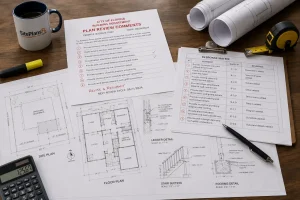
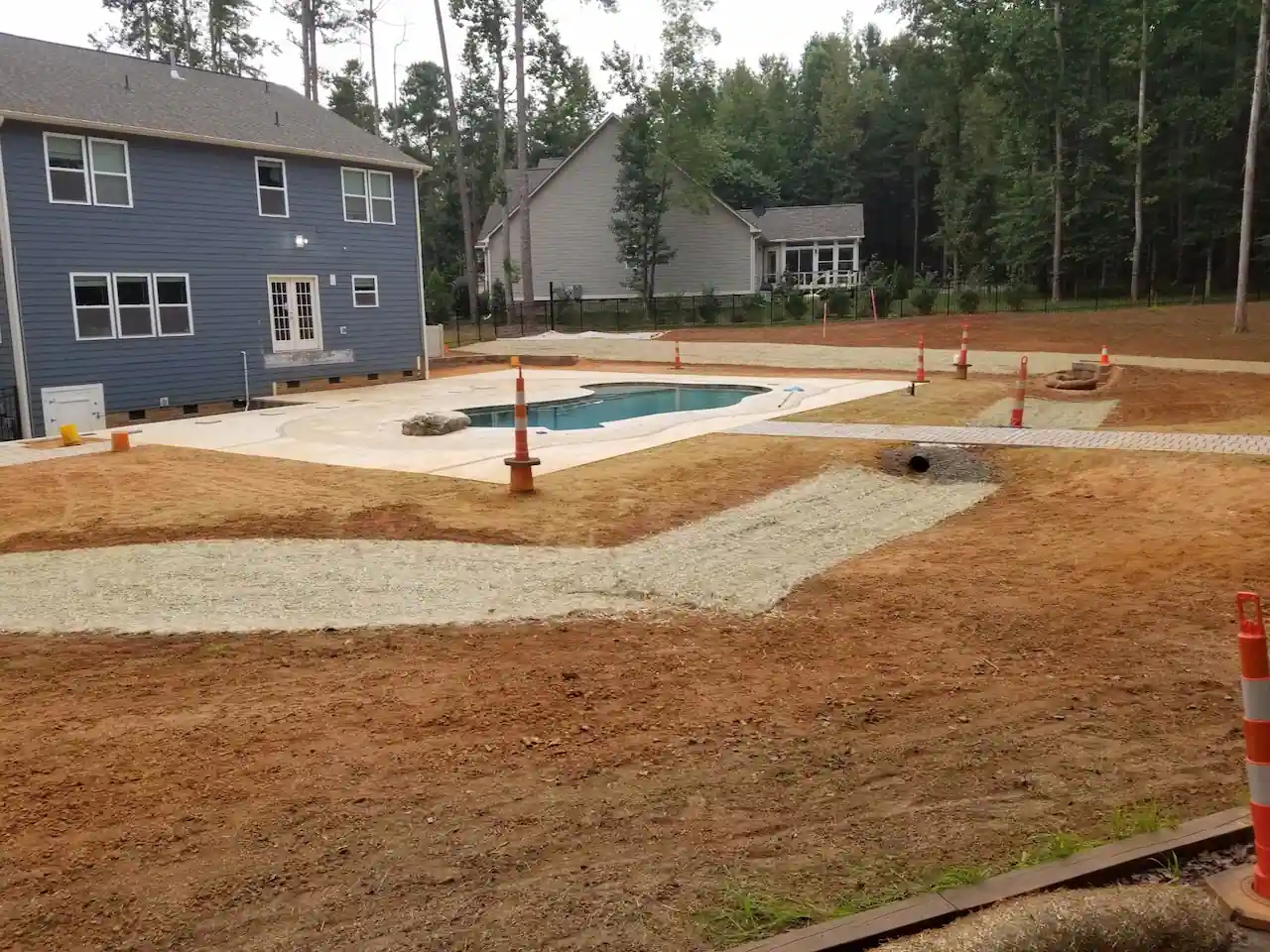
A Florida grading drainage plan is required for many commercial developments, new home construction projects, and sites that significantly change drainage patterns. Understanding Florida grading drainage plan requirements is essential because heavy rainfall and flat terrain can quickly create stormwater management challenges.
Here’s when you need a grading and drainage plan, and what it must show.
When Does Florida Require a Grading and Drainage Plan?
Knowing when a Florida grading drainage plan is required can help property owners avoid permit delays and ensure compliance with local drainage regulations.
For large residential projects:
- New residential construction typically requires a grading and drainage plan
- Major additions that significantly increase impervious surface may trigger drainage plan requirements
- Properties in areas with documented drainage problems may have specific drainage plan requirements
For projects near wetlands or waterbodies: Any project within a certain distance of a wetland, waterbody, or 100-year floodplain may require stormwater management review from the local Water Management District in addition to the building department.
Florida has five Water Management Districts:
- South Florida Water Management District (SFWMD) covers South Florida
- St. Johns River Water Management District (SJRWMD) Northeast and East Central Florida
- Southwest Florida Water Management District (SWFWMD) West Central Florida
- Suwannee River Water Management District (SRWMD) North Florida
- Northwest Florida Water Management District (NWFWMD) Panhandle
For significant drainage impacts, WMD permits are required in addition to local building permits. A properly prepared Florida grading drainage plan helps demonstrate how stormwater will be managed and whether the proposed project complies with local drainage regulations.
In many jurisdictions, a properly prepared Florida grading drainage plan is required before permit approval can be issued.
What a Florida Drainage Plan Must Show
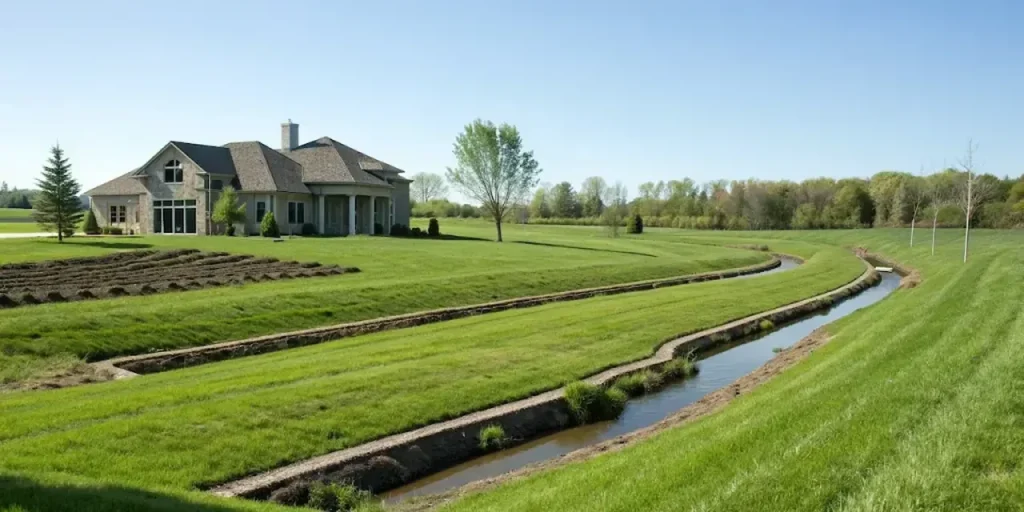
A basic site grading and drainage plan for a Florida permit includes:
Existing conditions:
- Existing grade elevations (spot elevations at key points)
- Existing drainage flow direction (arrows)
- Existing drainage structures (inlets, pipes, swales)
- Any existing retention/detention areas
Proposed conditions:
- Proposed finished grade elevations
- Proposed drainage flow directions
- Proposed drainage structures
- Retention or detention area if required
- Outfall point (where does the water go?)
For residential developments, a Florida residential grading and drainage plan should clearly show how stormwater will be collected, conveyed, and discharged while protecting neighboring properties from adverse drainage impacts.
Engineering calculations (attached or noted):
- Peak runoff calculations (pre- and post-development)
- Detention volume calculations
- Outfall capacity calculations
- Water quality treatment calculations (required by many Florida jurisdictions)
A complete Florida grading drainage plan helps reviewers evaluate how stormwater will move across the site and whether the proposed improvements meet local drainage requirements.
Florida’s Stormwater Management Design Standards
Florida stormwater management design is typically based on:
Design storm: The standard design storm in most Florida jurisdictions is the 25-year, 24-hour storm event. This means the drainage system must handle a storm with a 1-in-25-year probability in 24 hours.
Retention vs. detention:
- Retention: water is stored on-site and percolates into the ground (no outfall)
- Detention: water is stored temporarily and released slowly through a controlled outfall
Florida’s sandy soils in many areas allow for retention systems. The design approach used in a Florida grading drainage plan depends on site conditions, soil characteristics, and local regulatory requirements.
In South Florida’s limestone and clay soils, retention is less feasible.
Water quality treatment: Florida requires that the first inch of runoff from a developed site be treated for water quality, typically through retention in a dry pond or wet pond system.
PE Stamp for Drainage Plans in Florida
A drainage plan in Florida requires a PE review and stamp. Always. There are no exceptions. Every Florida grading drainage plan must be reviewed by a licensed Professional Engineer before submission.
The PE certifies that:
- The drainage calculations are correct
- The proposed system handles the design storm
- Water quality treatment meets Florida standards
- The system discharges in a manner that doesn’t harm downstream properties or water bodies
Our PE-stamped drainage plan service: $499
This includes the site plan, drainage design, engineering calculations, and PE stamp. More complex projects (larger sites, unusual drainage conditions) may require additional review. Contact us for a specific quote.
Get Your Florida Drainage Plan
Provide your project details, including the property address, site area, proposed impervious surface area, and any available drainage plans or surveys. Our team will review the information, determine the requirements for your Florida grading and drainage plan, and prepare a fast, accurate quote.
Every Florida grading and drainage plan is developed to align with local permitting requirements, helping streamline the review and approval process while supporting effective site drainage and stormwater management.
Contact us today to discuss your project and receive a customized quote.