I’ve been preparing Florida site plans since 2021. In that time, I’ve seen homeowners spend weeks confused, contractors waiting on permits that should have taken days, and pool companies lose jobs because the site plan they submitted got rejected on a technicality.
This guide fixes all of that.
By the end of this page, you’ll know exactly what a Florida site plan is, what goes on it, how each county is different, what gets plans rejected, and how to get one fast without overpaying.
What Is a Florida Site Plan for a Permit?
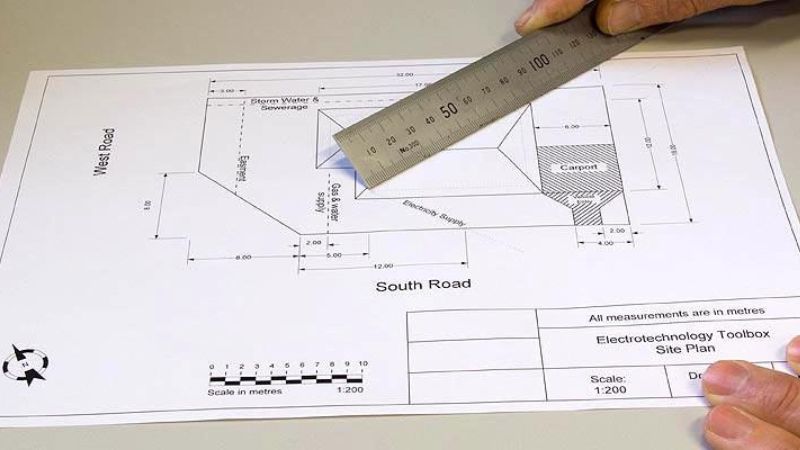
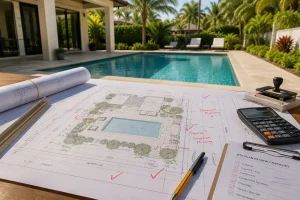
A site plan — sometimes called a plot plan — is a scaled, overhead drawing of your property. It shows the lot boundaries, your existing house, and the project you want to build. The Florida building department uses it to verify that your project meets local zoning requirements before issuing a permit.
Think of it as a bird’s-eye view of your property with measurements and labels. It’s not architectural drawings. It’s not structural plans. It’s specifically the overhead layout of your lot showing where everything sits in relation to property lines.
Every Florida county requires one. The format varies. The detail required varies. But the fundamental document is the same: a scaled drawing showing your property, existing structures, and proposed work.
When do you need a Florida site plan for a permit?
- Adding a pool or spa
- Building a deck, patio, or porch
- Constructing a shed, carport, or detached garage
- Adding a room addition or ADU
- Installing a fence
- Paving a driveway
- Making structural changes to an existing building
- Any commercial construction or renovation
If you’re applying for a building permit in Florida, assume you need a site plan. The only time you might not is a simple interior renovation with no footprint change — and even then, some counties want one.
What Must a Florida Site Plan Show?
Here’s the complete list of what Florida building departments typically require on a residential site plan:
Property information:
- Lot boundaries with dimensions in feet
- Legal description of the property (from your deed)
- Parcel ID number
- Street address and street name
- North arrow
- Scale (e.g., 1″ = 20′)
Existing conditions:
- Existing house/principal structure with dimensions
- All other existing structures (sheds, garages, pools, etc.)
- Driveways, walkways, paved areas
- Easements (drainage, utility, access)
- Any right-of-way
Setbacks:
- Distance from each proposed structure to each property line
- Front, rear, and both sides are clearly labeled
- Distance between the proposed structure and the existing structures
Proposed work:
- Proposed structure shown in a different line weight or labeled clearly
- Dimensions of the proposed structure
- Proposed setbacks labeled
Additional required elements (project-specific):
- For pools: barrier fence, pool dimensions, equipment pad location
- For drainage: drainage flow arrows, swale locations
- For commercial: parking, ADA, ingress/egress
- Flood zone designation (if in AE, VE, or other special flood hazard area)
- FEMA flood zone label from the current FIRM map
- Impervious surface area calculation (total paved/roofed area vs. lot size)
The one thing that trips up most DIY site plans: impervious surface. Many Florida counties cap impervious surface coverage — meaning how much of your lot can be covered by roof, driveway, pool deck, and other hard surfaces. If you’re adding a pool deck, that calculation matters. Get it wrong, and the permit gets rejected.
How Florida Counties Differ — And Why It Matters
Florida has 67 counties. Every one of them has slightly different requirements for site plans. Some of the major differences:
Scale requirements: Miami-Dade typically requires 1″=20′ for standard residential lots. Hillsborough often accepts 1″=30′. Using the wrong scale can result in your submission being returned.
Digital vs. paper submission: Most Florida counties now accept digital PDF submissions through their online portals. A few smaller counties still want paper. Know your county’s system before you submit.
Plan format: Some counties want a title block with specific information. Others accept a simple drawing with the required elements. Broward has more rigid formatting than, say, Flagler County.
Impervious surface limits: Miami-Dade caps residential impervious surface at 50% in most zones. Palm Beach County varies by zoning district. Not knowing your limit is how you design a pool patio and then find out the permit is impossible.
Setback rules: In a standard R-1 zone in most Florida counties, you’re looking at roughly: 25′ front, 7.5′ sides, 10′ rear for the principal structure. But pools often have different setback rules — typically 5′ from the rear and side property lines for the water’s edge, plus additional distance for the pool deck. These numbers change by county, sometimes by municipality within the county.
This is exactly why we research every property individually before drafting a single line. If you use a template or a one-size-fits-all approach, you’re gambling with your client’s time and money.
The Site Plan Process: How We Do It
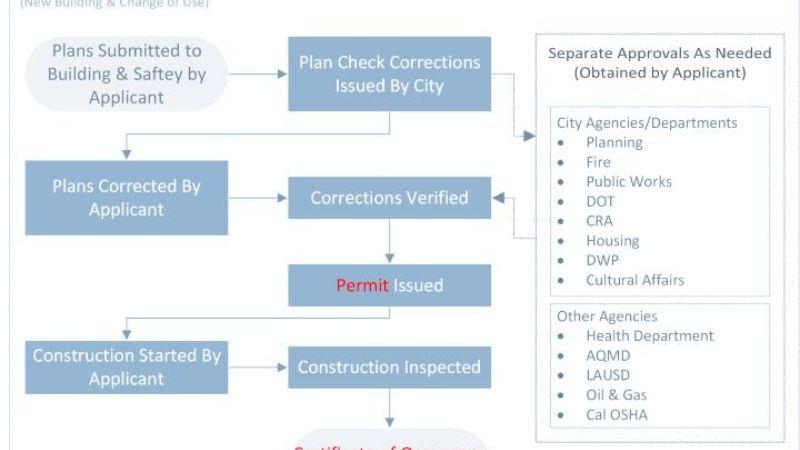
Here’s exactly how we prepare a Florida site plan at Site Plans FL:
Step 1: Property research (before we draw anything)
We pull your Florida parcel data from the county property appraiser’s GIS system. This gives us your lot dimensions, legal description, parcel ID, and recorded boundaries. We cross-reference with county zoning maps to identify your zoning district, then look up the specific setback requirements for that district.
We also check FEMA’s National Flood Insurance Program (NFIP) database for your flood zone designation. If you’re in an AE zone — which covers a large portion of coastal and inland Florida — that needs to be labeled on the plan and, in some cases, triggers additional review requirements.
Step 2: Aerial/satellite verification
GIS data is accurate for boundaries, but doesn’t reflect current conditions. We use high-resolution satellite imagery to verify the location of existing structures, driveways, and hardscape on the lot. For most Florida residential properties, this is sufficient. If you have a survey, we’ll incorporate it — it makes the plan more accurate, and some counties specifically request it.
Step 3: Drafting
We draw the plan in CAD. Every element is to scale. Setback dimensions are calculated and labeled. The proposed work is clearly shown and dimensioned. We use professional drafting standards: clean line weights, proper symbols, and complete labels.
Step 4: Review and formatting
Before we send anything, we check it against your specific county’s requirements. Is the scale correct? Is the title block formatted right? Are all required elements present? Is the impervious surface calculation included? This is where we catch issues before your building department does.
Step 5: Delivery
You get a PDF via email, typically within 12–24 hours of receiving your order. If your building department requests changes, we will revise at no additional charge.
Common Reasons Florida Site Plans Get Rejected

I’ve seen thousands of site plans go through Florida building departments. Here are the most common rejection reasons:
1. Missing setback dimensions. The drawing shows the structure, but doesn’t label the distance to the property line. Fix: always label all four setbacks.
2. Wrong or missing scale: “Not to scale” won’t work for permit submissions. Every Florida county requires a specific scale. Fix: include a graphic scale bar and note the scale in the title block.
3. Missing flood zone designation. If your property is in a FEMA-designated flood zone, it must be labeled as such. This catches people in the AE, VE, and X (shaded) zones. Fix: look up your property at msc.fema.gov and label the zone.
4. Impervious surface not calculated. Some counties require you to show the total impervious surface coverage percentage. If you don’t include it, the plan gets kicked back. Fix: calculate the existing hard surfaces plus the proposed addition, divide by the lot area, and show the percentage.
5. Existing structures not shown. You’re adding a pool, but didn’t show the existing garage or shed. If it’s on the lot, it must be on the plan. Fix: show everything that exists on the property.
6. Wrong parcel/address: Submitted the wrong parcel ID, or the address doesn’t match county records. Happens more than you’d think. Fix: Verify the parcel ID from the county property appraiser website before you submit.
7. No title block or incomplete title block. Some counties specifically require: owner name, address, parcel ID, date, and scale in the title block. Missing any of these results in the plan being returned. Fix: check your county’s specific checklist.
If you’ve already been rejected, use our Permit Rejection Fix Tool to identify what needs to be corrected.
Case Study: Miami Homeowner’s Pool Permit
Sarah in Palmetto Bay (Miami-Dade) came to us in March 2024. She’d tried to submit a pool permit twice using a site plan she drew herself in Google Drawings. Both submissions were rejected — once for missing setback dimensions and once for lacking flood zone notation.
Her property is in Zone AE. When you’re in AE, Miami-Dade requires the base flood elevation, the finished floor elevation of the house, and the flood zone to be clearly labeled. None of that was on her hand-drawn plan.
We prepared the site plan in 18 hours. We included:
- Accurate lot boundaries from the county GIS
- Pool location with setbacks to all property lines
- Flood zone designation (AE) and base flood elevation
- Pool barrier fence compliance note
- Impervious surface calculation
- Proper Miami-Dade title block format
Third submission: approved first time. The permit was issued 4 days after our plan was submitted.
Total cost for the site plan: $79. Total time from order to permit approval: 5 days.
Compare that to 6 weeks of back-and-forth on her DIY attempts.
What Does a Florida Site Plan Cost?
The short answer: our standard site plan starts at $79.
That covers a standard residential site plan for a single-family home — pool, deck, shed, fence, garage, driveway, or addition.
For PE-stamped site plans (required by many Florida counties for commercial projects and some residential additions), the fee starts at $499. This covers site plan preparation and the licensed Florida Professional Engineer’s review, signature, and seal.
For a full breakdown of what’s included and what factors affect pricing, use our Site Plan Cost Calculator.
What’s always included in every plan:
- County-specific research (we look up your actual setback requirements)
- GIS-verified property data
- Flood zone notation, if applicable
- Free revisions if the building department requests changes
- 12–24 hour delivery
- PDF format ready for submission
We also prepare plans for all 67 Florida counties. We have experience with every building department portal, every format requirement, every quirk. Miami-Dade’s ePlan system is different from Hillsborough’s Online Permitting system. We know both.
Florida-Specific Considerations You Can’t Ignore
Hurricane construction zone requirements
Florida is a wind-borne debris region. South Florida (Miami-Dade, Broward, and Palm Beach) has particularly strict requirements due to its designation as a High-Velocity Hurricane Zone (HVHZ). Your site plan doesn’t directly show structural elements, but your permit application will reference construction within this zone, and it affects what building departments look for.
Coastal Construction Control Line (CCCL)
If your property is within 100 feet of the mean high water line or within the CCCL — which runs along Florida’s entire coastline — you may need Florida DEP permits in addition to local building permits. We flag CCCL setbacks on plans for coastal properties.
Florida Building Code, 8th Edition
Florida adopted the 8th Edition of the Florida Building Code in 2023. This affects energy code, structural requirements, and wind load calculations. For site plans, the most relevant impact is on setback interpretations and accessory structure rules.
HOA restrictions
Your HOA may have setback requirements that are stricter than the county’s. HOA approval isn’t part of the permit process, but getting your permit approved with setbacks that violate your HOA is a separate headache. Know both sets of rules before you build.
Frequently Asked Questions
Do I need a survey to get a site plan? No. We prepare site plans using GIS data, parcel records, and satellite imagery. A survey is helpful if you have one — it improves accuracy — but it’s not required. Most Florida homeowners don’t have a current survey on hand, and we accommodate that.
How fast can I get a Florida site plan? Standard delivery is 12–24 hours from the time you submit your order. Rush same-day delivery is available — contact us first to confirm capacity.
Can I use the same site plan for multiple permits? Sometimes. If you’re pulling a pool permit and a deck permit at the same time, you can use one site plan that shows both. If you’re doing them at different times, you’ll typically need updated plans for each.
Do all Florida counties use the same process? No. Florida has 67 counties, each with its own building department, online portal, and submission process. Miami-Dade uses ePlan. Hillsborough uses Accela. Each has its own format requirements. We handle the research so you don’t have to.
What if I’m in an unincorporated area? Unincorporated areas fall under county jurisdiction rather than a city building department. The county sets the requirements. We verify which jurisdiction applies to your specific address.
What’s the difference between a site plan and a plot plan? They’re the same thing. “Site plan” and “plot plan” are used interchangeably in Florida permit applications. Some older building departments still use “plot plan” — it refers to the same document.
Get Your Florida Site Plan in 24 Hours
Ready to move forward? Here’s what to do:
- Use the Permit Drawing Package Finder to confirm what you need
- Submit your project details — address, project type, and your deadline
- Receive your permit-ready site plan within 12–24 hours
You can also reach us on WhatsApp for a quick question before ordering.
Standard site plan: $79 PE-stamped plan: $499
We serve all 67 Florida counties. We’ve prepared over 10,000 plans. We have a 99% approval rate for first submissions.
We also provide site plans for all 50 states on our main platform,siteplans. online— serving contractors and homeowners nationwide.