Florida Building Permit Requirements by County: The Definitive 2026 Guide
Here’s the problem with most guides about Florida building permits: they treat Florida like one place. It’s not. Florida has 67 counties. Within those counties, there are 411 municipalities. Your building permit requirements depend…
Here’s the problem with most guides about Florida building permits: they treat Florida like one place. It’s not.
Florida has 67 counties. Within those counties, there are 411 municipalities. Your building permit requirements depend on whether you’re in the incorporated city or the unincorporated county. They depend on your zoning district. They depend on the specific project type.
I’m going to break this down by county for the major Florida counties, the ones where I see the most permit applications, and give you specific, actionable information.
How Florida’s Building Permit System Works
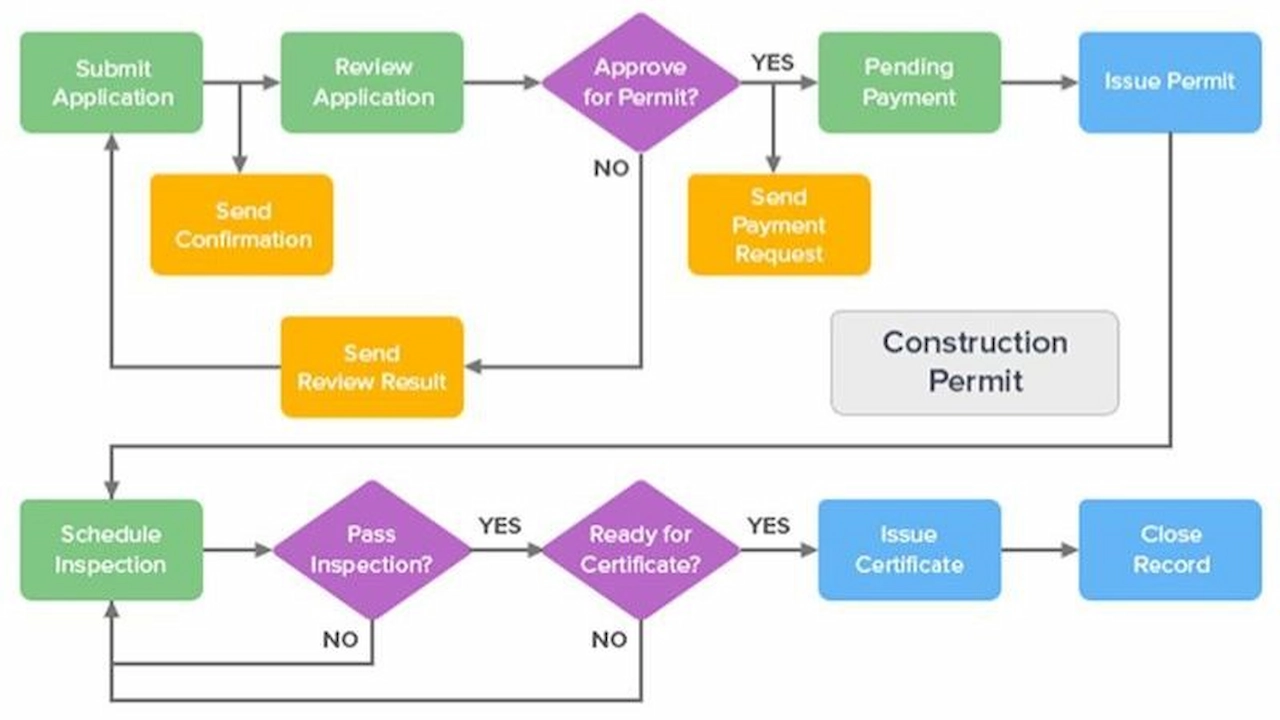
Before the county-by-county breakdown, here’s the structure:
Florida Building Code (FBC): Florida has a statewide building code, the Florida Building Code, currently in its 8th Edition (adopted 2023). All Florida counties must use the FBC as a baseline. Local amendments are allowed but must be more restrictive, not less.
Local Building Departments. Each county has a building department that administers permits. If you’re in an incorporated city, the city building department administers permits within city limits. If you’re in unincorporated areas, the county building department handles it. Learn more about our Residential Plans.
Online Permit Portals: Most Florida counties have moved to online permit submission. The specific software varies:
- Miami-Dade: ePlan system via MDC eBuild portal
- Hillsborough: Accela Citizen Access portal
- Orange County: OC Permit Center
- Broward: BSO/county portal
- Palm Beach: eBuildPermit
- Collier: Collier County Self-Service portal
Knowing your county’s system before you submit saves significant time.
Miami-Dade County Site Plan Requirements

Miami-Dade is Florida’s most populous county and has the most rigorous permit requirements. It’s also in the High-Velocity Hurricane Zone (HVHZ), which adds additional requirements beyond standard FBC requirements.
Site plan Building Permit requirements for Miami-Dade:
- Scale: 1″=20′ for standard residential lots (larger lots may use 1″=30′ or 1″=40′)
- Format: Must be submitted as a PDF through the ePlan system
- Title block required elements: Property address, folio number (parcel ID), owner name, preparer’s name/contact, date, scale
- Required elements: Lot boundaries with dimensions, legal description, all existing structures with dimensions, proposed structure with dimensions, all setbacks labeled, north arrow, site address, street names, easements
Miami-Dade setback requirements (standard single-family residential R-1 zone):
- Front: 25 feet
- Rear: 25 feet
- Sides: 7.5 feet
Pool-specific in Miami-Dade:
- Pool water’s edge to property line: 5 feet minimum (rear and sides)
- Pool water’s edge to front property line: 15 feet minimum
- Flood zone notation required (large portions of Miami-Dade are Zone AE)
- Barrier fence must comply with Florida Statute 515
- Impervious surface calculation required Miami-Dade caps residential at 50% in most R-1 zones
HVHZ considerations: Miami-Dade and Broward are the only two Florida counties designated as High-Velocity Hurricane Zones. This means higher wind speed design requirements and more rigorous product approval requirements.
For site plans, the main impact is that structural drawings (which accompany the site plan in a permit package) must be designed for 175 mph wind speeds in many areas.
Contact: Miami-Dade Building Department: 786-315-2000
Broward County Building Site Plan Requirements

Broward County uses a different approach from Miami-Dade. While Miami-Dade has a unified county-wide building department, Broward’s 31 municipalities each have their own building departments.
If you’re in Fort Lauderdale, you deal with Fort Lauderdale Building Services. If you’re in unincorporated Broward, you deal with the Broward County Building Division.
General Broward County requirements:
- Scale: typically 1″=20′ or 1″=30′ depending on lot size
- Format: PDF for digital submission through the municipality’s system
- Impervious surface: check your specific municipality rules vary significantly
- Flood zone: Large portions of Broward are in AE zones
Broward setbacks (unincorporated residential RS-4 zone):
- Front: 25 feet
- Rear: 25 feet
- Sides: 7.5 feet
Pool setbacks in Broward:
- 5 feet from the rear and side property lines to the pool water’s edge
- 25 feet from the front property line
- Barrier compliance per Florida Statute 515
Key Broward municipalities and their building departments:
- Fort Lauderdale: fortlauderdale.gov/departments/building
- Hollywood: hollywoodfl.org/building
- Pembroke Pines: ppines.com/building
- Miramar: miramarfl.gov/building
- Deerfield Beach: deerfield-beach.com
If you need help during submission or corrections, you can always Contact Us here.
Orange County (Orlando area) Site Plan Requirements
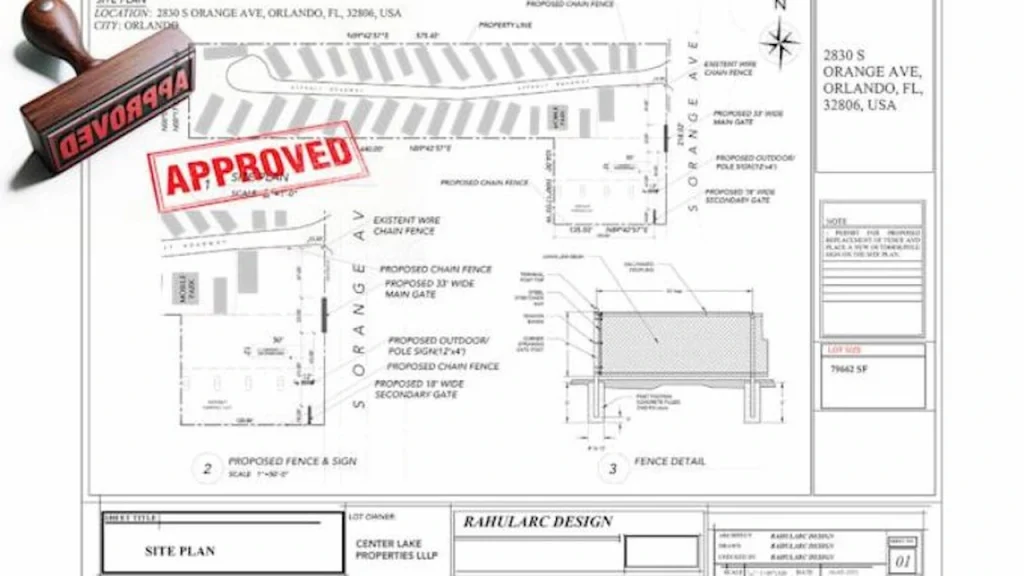
Orange County Building Division handles unincorporated Orange County. The City of Orlando has its own building department. The cities of Winter Park, Maitland, Apopka, etc., each have their own.
Orange County Building Division site plan requirements:
- Scale: 1″=20′ standard (1″=10′ for smaller lots is sometimes acceptable)
- Submission: OC Permit Center portal (ocfl.net/buildingplanning)
- Required elements: lot dimensions, legal description, parcel ID, all structures with dimensions, setbacks, proposed work, scale, north arrow
Orange County setbacks (residential R-1A zone most common single-family):
- Front: 25 feet
- Rear: 20 feet
- Sides: 7.5 feet
Pool permits in Orange County:
- Pool setback: 5 feet from rear and side property lines
- Barrier required per Florida Statute 515
- Electrical permit required separately (but sometimes combined with pool permit)
- Impervious surface calculation required
Hillsborough County (Tampa area) Site Plan Requirements
Hillsborough County uses Accela Citizen Access for permit applications. The county building department handles unincorporated Hillsborough. The cities of Tampa, Plant City, and Temple Terrace have their own departments.
Hillsborough County site plan requirements:
- Scale: 1″=20′ or 1″=30′ acceptable
- Submission: Accela Citizen Access portal
- Site plan must show: lot dimensions, parcel ID, address, all existing structures, proposed structure, all setbacks, north arrow, scale bar
Hillsborough County setbacks (RS-50 zone standard residential):
- Front: 25 feet
- Rear: 20 feet
- Sides: 7.5 feet
Pool permits in Hillsborough:
- Pool setback: 5 feet from rear and side property lines
- Septic system setbacks apply if on a septic system
- Barrier compliance required
- Health Department must approve if on septic/well (separate from building permit)
Palm Beach County Site Plan Requirements
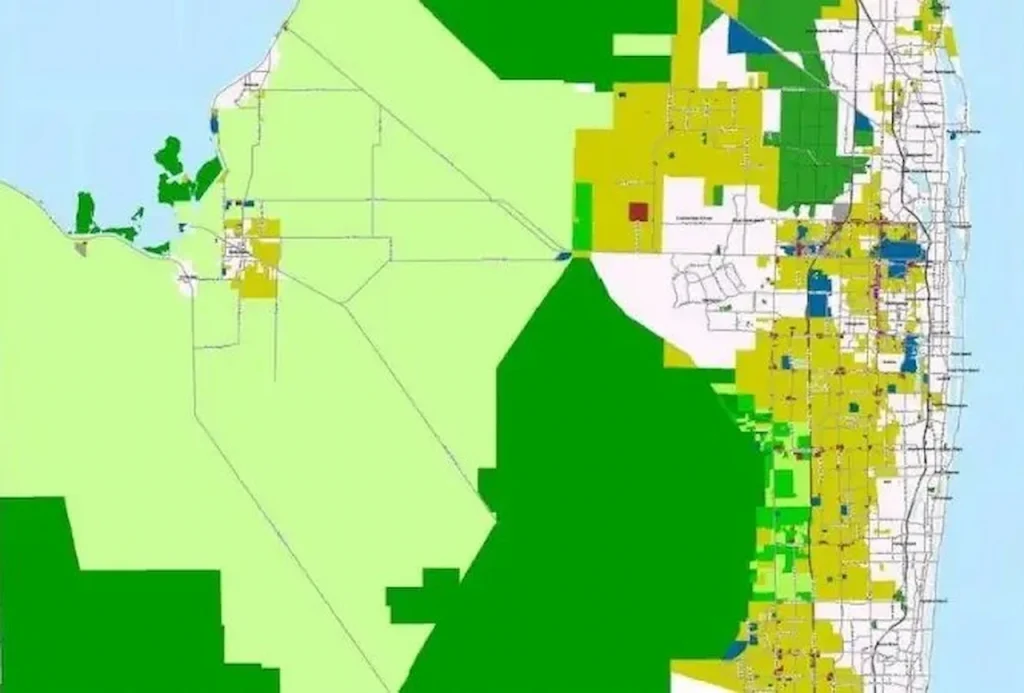
Palm Beach County is interesting because of the significant variation between municipalities. Palm Beach Gardens has different rules from West Palm Beach, which has different rules from Boca Raton.
Palm Beach County unincorporated site plan requirements:
- Electronic submission through the ePZB portal
- Scale: 1″=20′ standard
- Full title block required
Palm Beach County setbacks (AR zoning agricultural residential, common in unincorporated):
- Front: 40 feet
- Rear: 15 feet
- Sides: 15 feet
RS single-family residential:
- Front: 25 feet
- Rear: 15 feet
- Sides: 7.5 feet
Collier County (Naples area) Site Plan Requirements
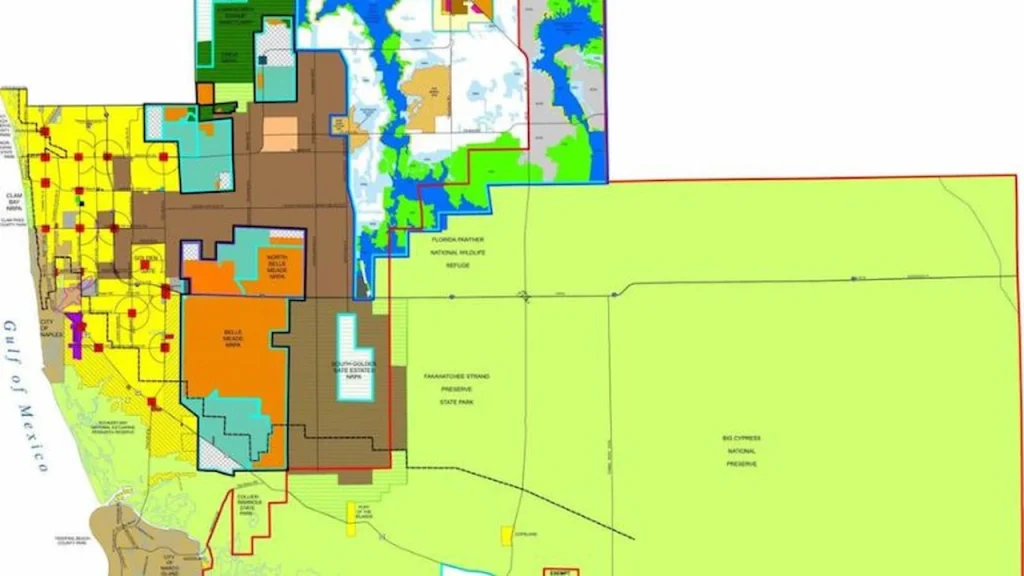
Collier County encompasses Naples and has a large rural/semi-rural area as well as coastal luxury development. The county uses its own permit portal.
Collier County site plan requirements:
- Submission through the Collier County self-service portal
- Scale: 1″=20′ standard
- Required elements: similar to those of other Florida counties
Collier County setbacks (RSF-1 single-family residential):
- Front: 30 feet
- Rear: 25 feet
- Sides: 7.5 feet
- Corner lots: 15 feet side setback facing street
Naples city limits have their own requirements if your property is in the City of Naples, contact the Naples Building Department separately.
Lee County (Fort Myers/Cape Coral area)

Lee County includes Cape Coral (which has its own massive building department it has more miles of canals than any other city in the world, creating unique stormwater management requirements) and Fort Myers.
Cape Coral specific notes:
- Cape Coral has extremely active permit processing thousands of pool permits per year
- Canal setbacks: additional setback requirements from canal seawalls
- If your property abuts a Cape Coral canal, the pool setback from the canal seawall is typically 2 feet minimum, plus any structural requirements
- Many Cape Coral properties are in FEMA AE zones
Lee County (unincorporated) setbacks:
- Front: 25 feet
- Rear: 20 feet
- Sides: 7.5 feet
Pinellas County (St. Petersburg/Clearwater)
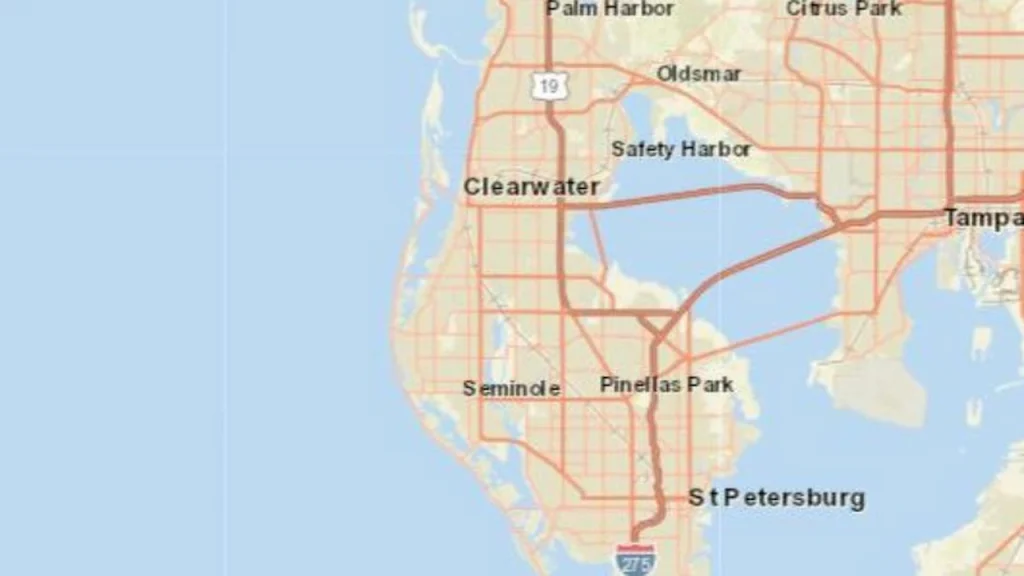
Pinellas County is Florida’s most densely populated county by land area. Lots tend to be smaller than in other counties, which makes impervious surface limits more relevant.
Pinellas County setbacks (R-1 single-family residential):
- Front: 25 feet
- Rear: 25 feet
- Sides: 5 feet
Impervious surface in Pinellas:
- Maximum 60% in residential zones
- Given smaller lot sizes, this can be a limiting factor for pools with large decks.
Volusia County (Daytona area)
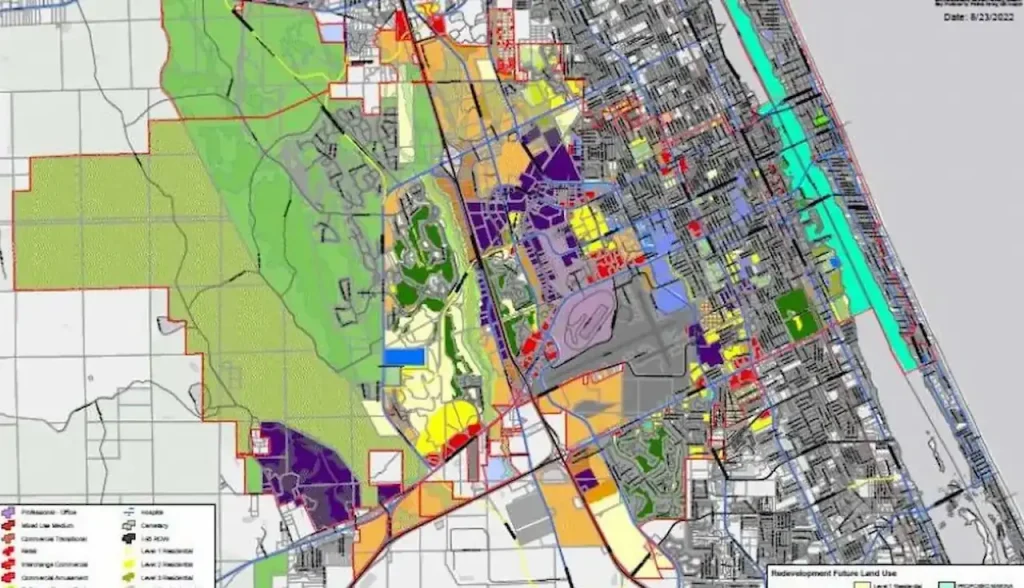
Volusia County setbacks (R-1 single-family):
- Front: 25 feet
- Rear: 20 feet
- Sides: 7.5 feet
Notable: Volusia County includes the City of New Smyrna Beach, which has its own building department. The city of NSB has published specific instructions for site plan preparation that are more detailed than most Florida counties.
Brevard County (Melbourne/Cocoa area)
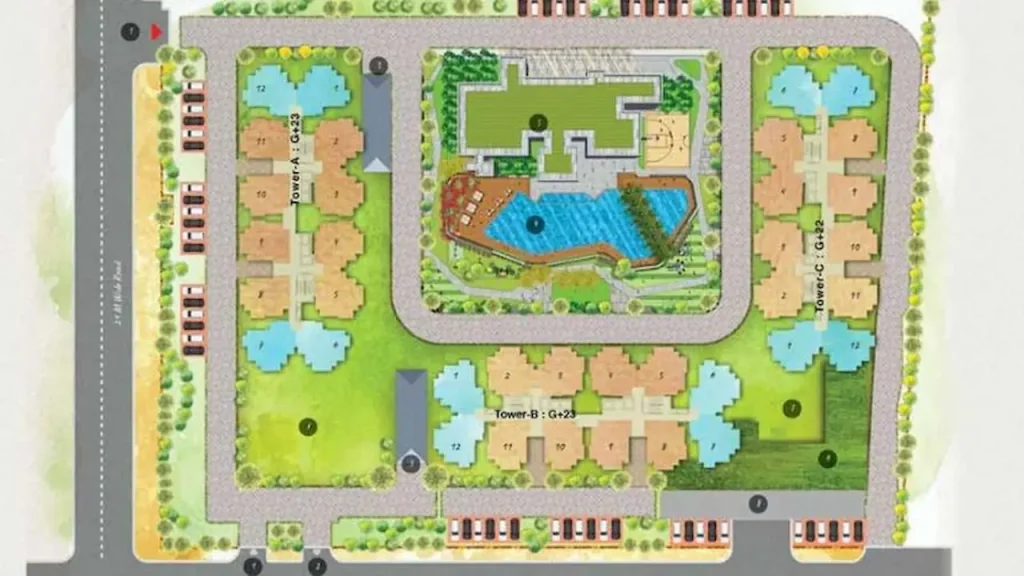
Brevard County Building and Development has a specific site plan checklist on their website (brevardfl.gov). Their requirements are well-documented.
Brevard County site plan requirements (from their published checklist):
- Survey or property boundary dimensions required
- All structures shown with dimensions
- Setbacks labeled
- Easements shown
- North arrow, scale, title block
What Happens if You Get the County Wrong?
I’ve seen contractors submit plans prepared for Hillsborough County to Pasco County. The setbacks are different. The format requirements are different. The online portal is different. The plan gets rejected, the contractor loses a week, and the homeowner is frustrated.
This is why we research each property individually. We don’t use templates. We don’t assume that what worked in Orange County will work in Osceola County. Before we draw a single line, we look up your specific address in the county GIS, identify your zoning district, and pull the exact setback requirements for that zone.
Use our Permit Drawing Package Finder to tell us your project details we’ll confirm exactly what you need for your specific county and address.
Related Articles
Florida Sunroom & Enclosed Porch Permit Guide: Plans, Codes & Requirements
Sep 15, 2026
Florida Metal Building Permit Requirements: Plans, Foundation & Engineering
Sep 15, 2026